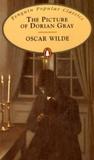
 The Picture of Dorian Gray by Oscar Wilde
My rating: 3 of 5 stars
When I was a child in the 80's I used to watch a British TV Science Fiction show called Blake's Seven. It was great, but the production values were low by today's standards so if you missed it out first time round I wouldn't advise going after it now.
Anyway, the first episode of series four dealt with a character called Dorian who had found a magic room in which he could stay young by causing his ageing to affect his partner instead of himself. Someone explained to me that the plot was borrowed from The Picture of Dorian Gray, which sort of meant over the years I didn't feel a need to read it. I knew that Dorian was magically staying young while someone else was absorbing all of the ageing and corruption on his behalf. I also knew when that someone else was killed it killed Dorian as well.
I finally got round to reading it because I wanted to find a book which was over 100 years old to read for a reading challenge. Overall I have to say I liked it.
I have known the quote "there is only one thing in the world worse than being talked about, and that is not being talked about" for many years and I knew it was Wilde, but I didn't know it was from this book.
As I read through the book I realised that quotes like that are pretty common in the book and it really comes through what a wordsmith the man was. The prose is very well written.
I also felt that the mental images I got were excellent. As I write this I can imagine in my mind's eye the grimy, dark, foggy London that Gray inhabited. Not all texts can manage to generate images so well.
The people who populate the book aren't very nice. Lord Henry Wotton's glib comments make him rather a tragic character, convinced of his own superiority, but ultimately lacking in any real substance. Dorian Gray himself starts out by being described as innocent, but his actions belie that supposition a little too quickly to be a gradual descent, which perhaps is what Wilde was trying for.
I felt the passage of time in the middle could have been one of two things happening. Bearing in mind that Dorian is eternally youthful, many years have to pass otherwise that effect isn't obvious. So the section which details all of the things Gray has been up to could be construed as "the years passed". The other thing I wondered was whether it was Wilde trying to show off his wealth of knowledge.
The end was more interesting than expected, the part where Dorian decided he was going to turn his behaviour round and not break the heart of his current lady friend. He was full of good intentions and sure that it would help, but found that the picture was further deformed, leading him to question whether the motives he had were the ones he really thought they were. I found that a very interesting concept: do we fully know our own true motivations behind our actions, or are the motivations we believe we have merely the story we tell ourselves to justify the actions?
All in all: good book, worth a read.
View all my reviews

No comments:
Post a Comment