Sunday, 15 February 2015

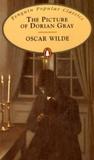
The Picture of Dorian Gray by Oscar Wilde

The Picture of Dorian Gray The Picture of Dorian Gray by Oscar Wilde
My rating: 3 of 5 stars

When I was a child in the 80's I used to watch a British TV Science Fiction show called Blake's Seven. It was great, but the production values were low by today's standards so if you missed it out first time round I wouldn't advise going after it now.

Anyway, the first episode of series four dealt with a character called Dorian who had found a magic room in which he could stay young by causing his ageing to affect his partner instead of himself. Someone explained to me that the plot was borrowed from The Picture of Dorian Gray, which sort of meant over the years I didn't feel a need to read it. I knew that Dorian was magically staying young while someone else was absorbing all of the ageing and corruption on his behalf. I also knew when that someone else was killed it killed Dorian as well.

I finally got round to reading it because I wanted to find a book which was over 100 years old to read for a reading challenge. Overall I have to say I liked it.

I have known the quote "there is only one thing in the world worse than being talked about, and that is not being talked about" for many years and I knew it was Wilde, but I didn't know it was from this book.

As I read through the book I realised that quotes like that are pretty common in the book and it really comes through what a wordsmith the man was. The prose is very well written.

I also felt that the mental images I got were excellent. As I write this I can imagine in my mind's eye the grimy, dark, foggy London that Gray inhabited. Not all texts can manage to generate images so well.

The people who populate the book aren't very nice. Lord Henry Wotton's glib comments make him rather a tragic character, convinced of his own superiority, but ultimately lacking in any real substance. Dorian Gray himself starts out by being described as innocent, but his actions belie that supposition a little too quickly to be a gradual descent, which perhaps is what Wilde was trying for.

I felt the passage of time in the middle could have been one of two things happening. Bearing in mind that Dorian is eternally youthful, many years have to pass otherwise that effect isn't obvious. So the section which details all of the things Gray has been up to could be construed as "the years passed". The other thing I wondered was whether it was Wilde trying to show off his wealth of knowledge.

The end was more interesting than expected, the part where Dorian decided he was going to turn his behaviour round and not break the heart of his current lady friend. He was full of good intentions and sure that it would help, but found that the picture was further deformed, leading him to question whether the motives he had were the ones he really thought they were. I found that a very interesting concept: do we fully know our own true motivations behind our actions, or are the motivations we believe we have merely the story we tell ourselves to justify the actions?

All in all: good book, worth a read.

View all my reviews

Friday, 30 January 2015

James Potter and the Hall of Elders' Crossing by G. Norman Lippert

James Potter and the Hall of Elders' Crossing (James Potter, #1)James Potter and the Hall of Elders' Crossing by G. Norman Lippert
My rating: 3 of 5 stars

Overall I enjoyed this book. I did have some misgivings at the start with the Reservoir Dogs opening (was that supposed to be a homage?), but I stuck with it and was glad I did.

I can't say that I entirely approved of the technomancy lessons either. I am one of the people who hated the sudden inclusion of the midi-chlorians in Star Wars Episode 1 - it's the Force, it just is, you can't suddenly try to explain it away as being caused by microscopic organisms. So trying to explain the science behind why magic works feels a bit the same. I also couldn't help but spot the fact that the explanation of apparation is the bloat drive from Harry Harrison's Bill, the Galactic Hero. Coming so soon after the Reservoir Dogs bit I felt that the level of homage was perhaps a bit high, so when the bloat drive turned out to be key to the story it made it worse.

However, fears of plagiarism aside, the overall feel of the story was fun, it was nice to be back at Hogwarts. There was enough about the plot that kept it interesting. Worth a read.

View all my reviews

Sunday, 25 January 2015

The first fifteen lives of Harry August by Clair North

The First Fifteen Lives of Harry AugustThe First Fifteen Lives of Harry August by Claire North
My rating: 4 of 5 stars

Warning, spoilers ahead.

I did enjoy this book. I found the concepts to be quite cleverly realised. It was an interesting concept that the Cronus club came into existence, then spread through time by the elderly members taking the news into the past and the young members taking the news into the future.

I think my main gripe stems from the concepts which were not explored. For example, the talk about what happens to the parallel worlds which are created each time history is changed. I had hoped that might be explored further, but it was not. What would the quantum mirror have shown? After going to all of that trouble and tantalisingly getting to see it built, we find it never allowed to work.

I'm also on the fence about Vincent telling him where he was from. Was that deliberate or a big slip? I just feel Vincent wouldn't have ever risked telling Harry that information, even if he was going to wipe his memory. That kind of makes me wonder about the second 15 lives. Was it a lie? Now Vincent knows he planned to kill him there would be all out war between them, each trying to find the other's origin. Hmmm... Don't know.

View all my reviews

Sunday, 11 January 2015

Raising Steam by Terry Pratchett

Raising Steam (Discworld, #40)Raising Steam by Terry Pratchett
My rating: 4 of 5 stars

I would dearly love to have loved this book. Terry Pratchett has been one of my favourite authors for almost as long as I can remember.

Regrettably it didn't feel up to par. I'm not the biggest Moist von Lipwig fan anyway, so this being another story about him possibly doesn't help.

It just felt less polished than much of his work, even his reference to the Railway Children felt forced, rather than his usual subtlety.

I think on the whole I am not so keen on the general storyline of the modern world catching up with Ankh Morpork and converting it gradually into a city we might see on Earth. It was a nice idea to touch on every now and then, it just seems to have been done a bit too much. We've resurrected the police force, the postal service, introduced the clacks, football and now the railways. Somehow it feels a bit like we've already been here, many of the themes have already been explored. Even the Iron Girder taking on a life of its own just feels a bit too familiar.

The other recurring theme is the racial theme with the various species from the Disk all living and working together. I kind of feel like I got the point quite a few books ago and I don't know that it needs raking over again and again.

That's all very negative, but there was still enough there for me to enjoy it enough to consider it worth a read, but will it get the re-reads that many of the earlier books have had? I'm not so sure.

View all my reviews

Tuesday, 30 December 2014

2015 Reading Challenge

I happened upon a link to a reading challenge for 2015, which was a list of 50 book types to read in the year. I can't say I'll be able to read all 50, I don't think I have time to managed one book per week, but it could be fun to try. I'll have to try to get my current book finished asap.

http://www.popsugar.com/love/Reading-Challenge-2015-36071458

The first thing I need to do is work out what books to read to fill out the whole list. I am going to try not to cheat, so each book will have to be one I haven't already read. I am going to make a list below, which I will have to refer back to as I fill it in - especially number 4 which is a book published that year.


  1. A book with more than 500 pages
    • The abduction by Mark Gimenez
  2. A classic romance
  3. A book that became a movie
  4. A book published this year
  5. A book with a number in the title
  6. A book written by someone under 30
  7. A book with nonhuman characters
  8. A funny book
  9. A book by a female author
  10. A mystery or thriller
  11. A book with a one-word title
  12. A book of short stories
  13. A book set in a different country
    • The recollections of Geoffry Hamlyn by Henry Kingsley
  14. A nonfiction book
  15. A popular author's first book
  16. A book from an author you love that you haven't read yet.
  17. A book a friend recommended
  18. A Pulitzer Prize-winning book
  19. A book based on a true story
    • Birdsong by Sebastian Faulks
  20. A book at the bottom of your to-read list
  21. A book your mom loves
    • Labyrinth by Kate Mosse
  22. A book that scares you
  23. A book more than 100 years old
  24. A book based entirely on its cover
  25. A book you were supposed to read in school but didn't
  26. A memoir
  27. A book you can finish in a day
  28. A book with antonyms in the title
  29. A book set somewhere you've always wanted to visit
  30. A book that came out the year you were born
  31. A book with bad reviews
  32. A trilogy
  33. A book from your childhood
  34. A book with a love triangle
  35. A book set in the future
    • Feersum Enjinn by Iain M. Banks
  36. A book set in high school
  37. A book with a colour in the title
  38. A book that made you cry
  39. A book with magic
  40. A graphic novel
    • V for Vendetta by Alan Moore and David Lloyd
  41. A book by an author you've never read before
  42. A book you own but have never read
  43. A book that takes place in your hometown
  44. A book that was originally written in a different language
  45. A book set during Christmas
  46. A book written by an author with your same initials
  47. A play
    • Hamlet by William Shakespeare
  48. A banned book
  49. A book based on or turned into a TV show
  50. A book you started but never finished.

Wednesday, 12 November 2014

The Hunger Games by Suzanne Collins

By some form of minor miracle I have managed to avoid most information about The Hunger Games.
I was aware of the basic premise inasmuch as there is a group of teenagers forced to fight until only one remains.
I was also aware that the main character is called Katniss, which I know thanks to a quote from an interview with Jennifer Lawrence in which she was asked how she and Katniss were similar, to which she replied "We look alike". I had also seen the photos so I knew that she sports a bow and arrows.
Beyond that I was surprisingly uninformed about the whole thing, which led me to think that it was probably as good a time as any to read the books before that changed. I tend to take the view that it's better to read books before watching the film version. I don't know if that's really true.
So I decided to sit down and read the first book. Overall I liked the way it was paced. There was a nice flow through the events without feeling rushed to get to the Games themselves, but also once in the games things didn't feel too rushed to get to a winner. One thing that I didn't get was the fact that the book was split into three parts for no apparent reason, since the action was continuous between each and didn't particularly mark a specific shift in events. Not an issue, just a minor thing I didn't understand the point of.
Reading the first part of it I found myself thinking I was reading a satire. The reality TV elements felt like a direct attack on such events today and the opulent luxury and dubious morality of the residents of the Capitol definitely feels pretty close to home. The characters who prepare Katniss for her appearances are a window into the lives of those in the Capitol, pre-occupied with themselves and living in the lap of luxury. It's a slightly odd mixture of feelings that Katniss seems to have for them - on the one hand she actually quite likes them, they're not bad people, but at times she almost seems to pity them.
One thing which I couldn't shake was the Battle Royale comparison, but I think that's to be expected with the similar themes. I'll admit to only ever having seen the film, not having read the book, but the premise of fighting to the last teenager standing is sufficiently similar to bring it to mind. I also found myself in some of the training sections leading up to the Games imagining the characters wearing the jumpsuits from The Running Man. I suppose that'll be because there are some similar themes being explored in terms of how it's all presented to the viewing public.
One thing I found myself convinced of from the outset was that Peeta meant what he said about being in love with Katniss, so every time she was doubting it I never was. I also think the way her feelings for him are portrayed is well done, the history, the bread from when they were kids. You find yourself wondering if she may actually fall for him in the end. After all, she was never really in love with Gale - or was she?
One thing which I found stood out to me as I was reading it was the fact that the whole book is from one point of view. Many narratives I read follow multiple characters and their stories mix together to give you an overall insight into the story as seen from various standpoints. The thing I found interesting about the way it was written was the occasional references made by Katniss to the viewing public, her family or Haymitch. She was imagining what they might be thinking about what was going on in the arena. Of course she could be wrong, but it allowed me to visualise people sitting down to watch the show, or watching the evening highlights or frequenting the betting shops to wager on who will be next to die. It's actually surprising how much of a mental image I managed to get of what was going on outside of the arena without ever actually leaving it.
Another point I considered was the use of 13 districts. It may be that it doesn't really matter in the rest of the story, but I found myself wondering whether there were 13 districts so that unlucky number District 13 could be the one which was destroyed 74 years before. Although my history of the United States is limited I also found myself wondering if there was some sort of reference to the fact that there were 13 colonies which formed the original United States. The reason I wonder if that may be of note is that when the 13 colonies banded together they didn't control even half of North America, there were other colonies which weren't to join the union for years to come. The thought that makes me consider is could that be a deliberate hint? Are there other Districts which are not allied to the Capitol? Indeed, taking that thought one step further: was District 13 really destroyed or did it secede from Panem? I will of course find out when I read the other books, but it is fun to consider what may be going on in the wider world which we don't know anything about.
I was a little surprised when Rue died as soon as she did. I must confess that my mental image of her was Newt from Aliens, so I had some sort of crazy idea that there would be a scene later with Katniss defending her from someone and shouting 'Get away from her, you bitch!'. That was my mind going off at a tangent, rather than anything constructive, but that's just the way my brain works.
I wondered about the sponsors. In our environment sponsors are companies who pay lots of money to use your success to promote themselves. I found myself a little grey on what exactly was happening with the sponsorship in the arena. There was a section which implied that Haymitch was in a position to choose what the tributes were to get in the arena, yet when the bread came in Katniss recognised it as coming from District 11 who must have had to scrape together to afford it, so that implies it's not big corporate sponsors, but individuals all chipping in. I may have missed something, but I am not sure how that part is supposed to work. Maybe in the next book Katniss and Peeta will be acting as mentors for the next set of tributes, so perhaps when we see it from the other side it will all become clear. I will wait and see.
I also found myself pondering the term used for the candidates for the games, they are called tributes. The ceremony where they are chosen is called the reaping. In the context the Capitol are doing the reaping, while the districts are forced to hand over one of their most prized assets - their children. It's hard not to think of the Grim Reaper and associate the term with death, but that's probably intentional. I think the thing about the term tribute is that it implies a transfer of ownership. Once the tributes are handed over they belong to the Capitol, they are seen as possessions to do with as they see fit.
I also wasn't sure about the muttants in the arena that kill Cato, were they supposed to be the other contestants or just look like them?
Anyway, lots of thoughts and several things I am looking forward to finding out more about in the next books.
The ending was interesting, since it left a few things open, but at the same time I suppose it could have stood alone if no sequel was ever written.
So, I suppose the main thing is how much trouble is she in for defying the Capitol?
Monday, 10 November 2014

What am I doing?

Perhaps the heading for this should read 'What am I not doing?'

What I am not doing is reviewing books, instead I am writing down the thoughts that I have about things I have read or am reading. That does mean that my comments will be spoiler heavy.

This is not intended to be particularly deep and meaningful, rather it's me sorting out my thoughts by writing them down.