Sunday, 15 February 2015

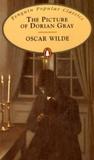
The Picture of Dorian Gray by Oscar Wilde

The Picture of Dorian Gray The Picture of Dorian Gray by Oscar Wilde
My rating: 3 of 5 stars

When I was a child in the 80's I used to watch a British TV Science Fiction show called Blake's Seven. It was great, but the production values were low by today's standards so if you missed it out first time round I wouldn't advise going after it now.

Anyway, the first episode of series four dealt with a character called Dorian who had found a magic room in which he could stay young by causing his ageing to affect his partner instead of himself. Someone explained to me that the plot was borrowed from The Picture of Dorian Gray, which sort of meant over the years I didn't feel a need to read it. I knew that Dorian was magically staying young while someone else was absorbing all of the ageing and corruption on his behalf. I also knew when that someone else was killed it killed Dorian as well.

I finally got round to reading it because I wanted to find a book which was over 100 years old to read for a reading challenge. Overall I have to say I liked it.

I have known the quote "there is only one thing in the world worse than being talked about, and that is not being talked about" for many years and I knew it was Wilde, but I didn't know it was from this book.

As I read through the book I realised that quotes like that are pretty common in the book and it really comes through what a wordsmith the man was. The prose is very well written.

I also felt that the mental images I got were excellent. As I write this I can imagine in my mind's eye the grimy, dark, foggy London that Gray inhabited. Not all texts can manage to generate images so well.

The people who populate the book aren't very nice. Lord Henry Wotton's glib comments make him rather a tragic character, convinced of his own superiority, but ultimately lacking in any real substance. Dorian Gray himself starts out by being described as innocent, but his actions belie that supposition a little too quickly to be a gradual descent, which perhaps is what Wilde was trying for.

I felt the passage of time in the middle could have been one of two things happening. Bearing in mind that Dorian is eternally youthful, many years have to pass otherwise that effect isn't obvious. So the section which details all of the things Gray has been up to could be construed as "the years passed". The other thing I wondered was whether it was Wilde trying to show off his wealth of knowledge.

The end was more interesting than expected, the part where Dorian decided he was going to turn his behaviour round and not break the heart of his current lady friend. He was full of good intentions and sure that it would help, but found that the picture was further deformed, leading him to question whether the motives he had were the ones he really thought they were. I found that a very interesting concept: do we fully know our own true motivations behind our actions, or are the motivations we believe we have merely the story we tell ourselves to justify the actions?

All in all: good book, worth a read.

View all my reviews

Friday, 30 January 2015

James Potter and the Hall of Elders' Crossing by G. Norman Lippert

James Potter and the Hall of Elders' Crossing (James Potter, #1)James Potter and the Hall of Elders' Crossing by G. Norman Lippert
My rating: 3 of 5 stars

Overall I enjoyed this book. I did have some misgivings at the start with the Reservoir Dogs opening (was that supposed to be a homage?), but I stuck with it and was glad I did.

I can't say that I entirely approved of the technomancy lessons either. I am one of the people who hated the sudden inclusion of the midi-chlorians in Star Wars Episode 1 - it's the Force, it just is, you can't suddenly try to explain it away as being caused by microscopic organisms. So trying to explain the science behind why magic works feels a bit the same. I also couldn't help but spot the fact that the explanation of apparation is the bloat drive from Harry Harrison's Bill, the Galactic Hero. Coming so soon after the Reservoir Dogs bit I felt that the level of homage was perhaps a bit high, so when the bloat drive turned out to be key to the story it made it worse.

However, fears of plagiarism aside, the overall feel of the story was fun, it was nice to be back at Hogwarts. There was enough about the plot that kept it interesting. Worth a read.

View all my reviews

Sunday, 25 January 2015

The first fifteen lives of Harry August by Clair North

The First Fifteen Lives of Harry AugustThe First Fifteen Lives of Harry August by Claire North
My rating: 4 of 5 stars

Warning, spoilers ahead.

I did enjoy this book. I found the concepts to be quite cleverly realised. It was an interesting concept that the Cronus club came into existence, then spread through time by the elderly members taking the news into the past and the young members taking the news into the future.

I think my main gripe stems from the concepts which were not explored. For example, the talk about what happens to the parallel worlds which are created each time history is changed. I had hoped that might be explored further, but it was not. What would the quantum mirror have shown? After going to all of that trouble and tantalisingly getting to see it built, we find it never allowed to work.

I'm also on the fence about Vincent telling him where he was from. Was that deliberate or a big slip? I just feel Vincent wouldn't have ever risked telling Harry that information, even if he was going to wipe his memory. That kind of makes me wonder about the second 15 lives. Was it a lie? Now Vincent knows he planned to kill him there would be all out war between them, each trying to find the other's origin. Hmmm... Don't know.

View all my reviews

Sunday, 11 January 2015

Raising Steam by Terry Pratchett

Raising Steam (Discworld, #40)Raising Steam by Terry Pratchett
My rating: 4 of 5 stars

I would dearly love to have loved this book. Terry Pratchett has been one of my favourite authors for almost as long as I can remember.

Regrettably it didn't feel up to par. I'm not the biggest Moist von Lipwig fan anyway, so this being another story about him possibly doesn't help.

It just felt less polished than much of his work, even his reference to the Railway Children felt forced, rather than his usual subtlety.

I think on the whole I am not so keen on the general storyline of the modern world catching up with Ankh Morpork and converting it gradually into a city we might see on Earth. It was a nice idea to touch on every now and then, it just seems to have been done a bit too much. We've resurrected the police force, the postal service, introduced the clacks, football and now the railways. Somehow it feels a bit like we've already been here, many of the themes have already been explored. Even the Iron Girder taking on a life of its own just feels a bit too familiar.

The other recurring theme is the racial theme with the various species from the Disk all living and working together. I kind of feel like I got the point quite a few books ago and I don't know that it needs raking over again and again.

That's all very negative, but there was still enough there for me to enjoy it enough to consider it worth a read, but will it get the re-reads that many of the earlier books have had? I'm not so sure.

View all my reviews